





New Research from Goal Accelerator: Redefining Decent Work for Marginalised Adolescent Girls and Young Women
Getting a job is only part of the story. New research from the Goal Accelerator programme explores what decent work looks like from the perspective of marginalised adolescent girls and young women, and what needs to be in place for them not only to enter work, but to sustain and progress in it.
Funded by the Standard Chartered Foundation, Goal Accelerator is a sport-powered, gender-responsive programme operating in Malaysia, Mauritius, Pakistan, Sri Lanka and the United Kingdom. The programme combines transferable skills, financial literacy and pathways into waged employment and self-employment, while also recognising the wider conditions that shape young women’s choices and opportunities, including safety, mobility, care responsibilities and social protection – creating the conditions for lasting economic resilience.
Goal Accelerator operates in labour markets where most marginalised adolescent girls and young women do not hold formal, full-time jobs. Instead, they work in informal, short-term, or self-employed arrangements that might not be fully captured by conventional decent work frameworks.
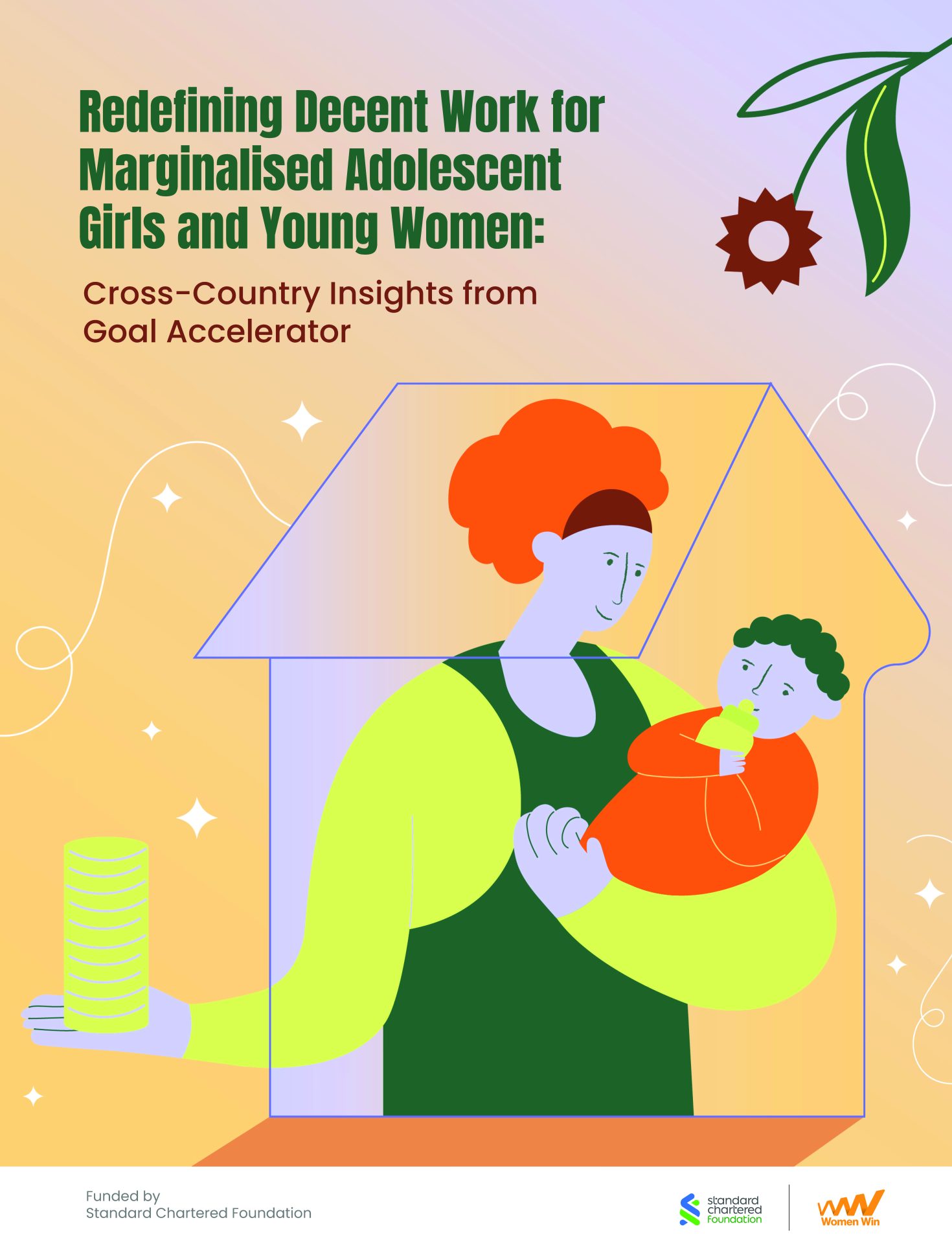
The research, Redefining Decent Work for Marginalised Adolescent Girls and Young Women: Cross-Country Insights from Goal Accelerator, was developed with Goal Accelerator partners to better understand how young women themselves experience and define decent work, re-centring their lived experiences, clarifying what “decent” means in practice in their contexts and how programmes and partners can better measure and support it.
Looking beyond getting a job
Many conventional definitions of decent work are built around formal, full-time employment. But for many of the young women involved in Goal Accelerator, work can look very different. It may be informal, short-term, home-based or self-employed, and decisions about work are often shaped by responsibilities and barriers outside the workplace.
Through desk research and more than 30 interviews with adolescent girls and young women, coaches, employers, sector specialists and other stakeholders, the study identified six areas that consistently shaped whether young women considered work to be decent: adequate income; safety, dignity and freedom; security and stability; social protection; compatibility with care responsibilities; and confidence, agency and opportunities to progress.
The findings make clear that income alone is not enough. Work also needs to be safe, predictable and compatible with young women’s lives. In some cases, self-employment can offer flexibility, but may come with less stability or fewer opportunities to grow. The research therefore challenges programmes and funders to look beyond whether a young woman has accessed work, and to consider whether she can sustain it and shape her pathway on her own terms.
Putting the learning into practice
For Goal Accelerator, the research provides an opportunity to strengthen how the programme defines and measures success. It reinforces the importance of combining skills and pathways to employment with the wider conditions that make decent work possible, from safe mobility and childcare to social protection, supportive networks and opportunities to progress.
It also offers learning for the wider sector. The research calls for more holistic and context-specific approaches that respond to the realities of young women’s lives rather than expecting them to fit into a single model of work.
Ultimately, the findings point to a simple but important shift: success is not only about helping young women get into work, but about creating pathways into work that offer greater dignity, choice, stability and possibility.